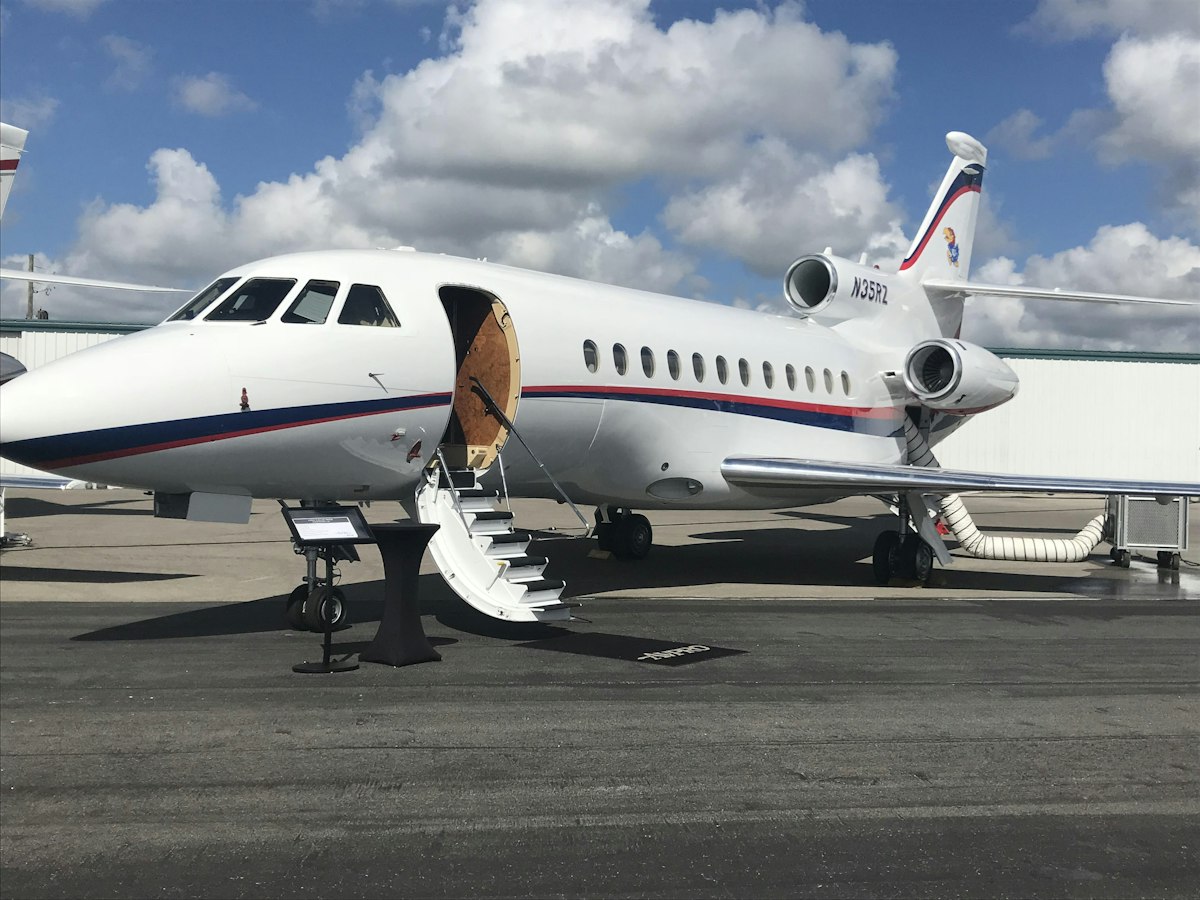

For decades, connecting Mumbai to Manhattan required either a stop in Europe or the Middle East, or enduring a grueling 15+ hour commercial flight with one or two connections. The latest generation of ultra-long-range business jets has fundamentally changed this reality.
The Gulfstream G700, Bombardier Global 7500, and the forthcoming Dassault Falcon 10X have extended the practical range of business aviation to create genuine intercontinental capability. Understanding the advantages and trade-offs of each platform is essential for executives and business travelers whose missions span Asia, the Middle East, and the Americas.
The Strategic Importance of Range
Range in business aviation is not an academic measure — it translates directly into mission capability and cost efficiency. A jet that requires a fuel stop has fundamentally different operational economics than an aircraft that completes the mission non-stop.
A Mumbai-to-New York routing via the Middle East and Europe requires a fuel stop in Europe, adding 3-5 hours to journey time, incurring landing fees, crew rest requirements, and crew change procedures. A non-stop routing eliminates all of these inefficiencies.
Moreover, non-stop capability enables true intercontinental operations that commercial aviation cannot match. A business executive can depart Mumbai in the evening, sleep for 14 hours in the aircraft's private cabin, and arrive in New York rested and ready for the business day. This operational advantage is transformative for executives managing global operations.
The ultra-long-range segment exists precisely because certain mission profiles demand it. Executives managing operations across India, the GCC, and North America. International investors making critical site visits across multiple continents in a single trip. Global business leaders for whom time is the scarcest resource.
The Gulfstream G700: Power and Capability
The Gulfstream G700, which entered service in 2022, represents the evolution of Gulfstream's legendary G-series lineage. The G700 is the company's flagship ultra-long-range offering, designed specifically for transcontinental missions.
Range: The G700 has a published range of 13,000 nautical miles with 8 passengers and 2 crew, operating under NBAA reserves (reserves for diversion to alternate airport). This range is sufficient for Mumbai to New York non-stop, though routing and wind patterns matter significantly.
Performance: The G700 leverages Rolls-Royce engines that provide exceptional power and reliability. Takeoff performance from high-altitude and hot-and-high airfields is excellent, which is critical for airports in India and the Middle East that operate in challenging environments.
Cabin Configuration: Gulfstream's cabin design has set industry standards for comfort on long-range missions. The G700's cabin width allows for generously sized suites and exceptional ergonomics. The aircraft can be configured with multiple sleeping areas, allowing crew and passengers to rest separately during ultra-long-range missions.
Operating Economics: The G700 is among the most expensive ultra-long-range jets to purchase, with acquisition prices typically in the $75-80 million range for new aircraft. Operating costs are approximately $7,000-8,000 per flight hour including fuel, crew, maintenance reserves, and crew positioning expenses.
Service and Support: Gulfstream's global service network is exceptional. Parts availability, technical support, and maintenance coordination across Gulfstream's worldwide network is best-in-class, which is essential for aircraft operating on global missions.
The Bombardier Global 7500: Luxury and Range
The Bombardier Global 7500, which entered service in 2018, represents a different approach to ultra-long-range flight — emphasizing cabin luxury and passenger comfort alongside exceptional range.
Range: The Global 7500 offers a published range of 13,350 nautical miles with 8 passengers, making it slightly superior to the G700 in published range, though practical mission range depends heavily on routing and wind patterns.
Cabin Configuration: The Global 7500's cabin is legendary for its liberal use of space and innovative design. The cabin is slightly wider than the G700, and Bombardier's design emphasizes modularity — sleeping arrangements, galley configurations, and lavatory options can be tailored to specific mission requirements.
Comfort Features: The Global 7500 was specifically designed for ultra-long-range comfort. The cabin includes a full-size shower, allowing passengers to freshen up during long flights. Cabin altitude management is exceptional, maintaining lower cabin altitude at cruise. These features significantly improve passenger well-being on 14-16 hour flights.
Operating Economics: The Global 7500's acquisition cost is comparable to the G700, typically $75-80 million for new aircraft. Operating costs are slightly lower, approximately $6,500-7,500 per flight hour, reflecting Pratt & Whitney engine efficiency.
Maintenance Support: Bombardier's global service network is extensive, though some regions (particularly India) have less-developed Bombardier infrastructure compared to Gulfstream. This can result in slightly longer maintenance turnarounds for unscheduled maintenance in certain geographies.
The Dassault Falcon 10X: The Emerging Contender
The Dassault Falcon 10X, currently in final certification phases with expected deliveries beginning in 2024-2025, represents a new generation of ultra-long-range aircraft. While not yet in widespread service, it is worth understanding as buyers evaluate options for future acquisitions.
Range: The Falcon 10X is certified with a range of 13,520 nautical miles, positioning it as the longest-range business jet in its class. This additional range provides operational flexibility and reduces fuel stop risk on challenging routings.
Cabin Design: Dassault has approached the Falcon 10X with emphasis on advanced manufacturing, innovative materials, and cutting-edge avionics integration. The cabin design emphasizes efficiency and modern aesthetics, though early reviews suggest slightly less spacious cabin width compared to the Global 7500.
Acquisition Cost: Pricing for the Falcon 10X is expected to be competitive with the G700 and Global 7500, likely $70-75 million for new aircraft, potentially positioning it as a slightly more economical option.
Operational Maturity: As with any new aircraft program, the Falcon 10X's in-service record is limited. Buyers should factor in the reality that new aircraft type support, maintenance procedures, and reliability data accumulate over years rather than months.
Performance Comparison for Mumbai-to-New York Operations
Let's evaluate these three aircraft against a specific mission profile: Mumbai to New York non-stop, with a typical business jet passenger loading of 8-10 people plus 2 crew.
Range Adequacy: All three aircraft are capable of the approximately 8,300 nautical mile Mumbai-to-New York routing under normal conditions. However, jet stream positioning, weather routing, and required fuel reserves can result in scenarios where marginal range aircraft require fuel stops. The Falcon 10X's additional range provides marginal advantage.
Takeoff Performance: All three aircraft perform well from Mumbai's airports, though high temperatures and altitude can impact performance. The Gulfstream G700's Rolls-Royce power plant has slight advantage in hot-and-high operations.
Cabin Comfort: For a 15-16 hour flight, cabin comfort becomes important. The Global 7500's wider cabin and shower are significant advantages for ultra-long-range travel. The G700's proven reliability and service network provide intangible confidence. The Falcon 10X's modern design is appealing, though limited in-service experience is a consideration.
Operational Support: In Asia and the Middle East, Gulfstream's service network is superior. This translates into faster maintenance turnarounds and better parts availability if unscheduled maintenance occurs during positioning flights.
Total Cost of Ownership Analysis
For a five-year ownership period with 400 hours annual utilization (typical for executives operating intercontinental missions), the total cost profile is:
Gulfstream G700:
- Acquisition: $78 million
- Annual Operating: $3.5 million (estimated)
- Depreciation: ~$15 million over 5 years
- Total 5-Year Cost: ~$35 million
Bombardier Global 7500:
- Acquisition: $77 million
- Annual Operating: $3.2 million (estimated)
- Depreciation: ~$14 million over 5 years
- Total 5-Year Cost: ~$33 million
Dassault Falcon 10X (estimated):
- Acquisition: $72 million
- Annual Operating: $3.1 million (estimated)
- Depreciation: ~$12 million over 5 years
- Total 5-Year Cost: ~$30.5 million
These estimates assume no major unscheduled maintenance. Real-world costs depend on maintenance utilization, market conditions affecting depreciation, and fuel price volatility.
The Strategic Decision
For executives whose mission profile includes non-stop Mumbai-to-New York operations, all three aircraft are capable. The choice depends on priorities:
- **If reliability and service network are paramount**: Gulfstream G700
- **If cabin comfort is the highest priority**: Bombardier Global 7500
- **If acquisition cost and range are key factors**: Dassault Falcon 10X
The emergence of genuine ultra-long-range aircraft has enabled business models that were previously impossible. Global executives can now conduct business across Asia, the Middle East, and the Americas with the efficiency and comfort that intercontinental private aviation provides.
India-GCC-North America Connectivity
What makes these aircraft particularly important for business leaders operating in India, the GCC, and North America is not just technical capability, but the strategic implications of that capability.
Previously, these regions operated as somewhat separate business spheres. Trade, investment, and business relationships existed, but the friction of international travel limited intensive business engagement. Ultra-long-range aircraft eliminate that friction.
An executive based in Mumbai can now visit Riyadh for a day of business, then fly non-stop to New York for critical meetings, completing a multi-continent business visit in a timeframe that commercial aviation cannot match. This operational capability fundamentally changes how global business is conducted.
At MDG Aviation Limited, we have guided clients through the decision process of ultra-long-range aircraft acquisition. Understanding not just the technical specifications, but how an aircraft serves a specific mission profile and business model, is essential. The Mumbai-to-Manhattan mission is increasingly common, and understanding how to execute it optimally — with the right aircraft, the right crew, and the right operational support — is a specialty we have developed through extensive experience.
The era of business aviation is increasingly defined by transcontinental capability. The aircraft you choose should enable your most ambitious business aspirations.