
Saudi Arabia is undergoing a transformation as profound as any nation in the world. Vision 2030, the Kingdom's sweeping reform agenda, is reshaping its economy, diversifying away from oil dependence, and positioning itself as a global destination for business, investment, tourism, and culture. For private aviation travelers, this transformation creates extraordinary opportunities.
Vision 2030 and the Reimagining of the Kingdom
In 2016, Saudi Arabia announced Vision 2030, an ambitious reform program designed to reduce oil dependency and diversify the economy. Nearly a decade later, the vision is materializing in concrete and steel across the Kingdom.
The results are remarkable. Foreign direct investment is accelerating. International tourism is recovering post-pandemic and expanding. New industries — technology, entertainment, hospitality, renewable energy — are developing alongside the traditional energy sector. And the nation that was once characterized as closed to outsiders is opening its doors, softening visa requirements, and actively courting international business and tourism.
For business aviation, Vision 2030 creates structural demand. New businesses require logistics and connectivity. International executives and investors visiting the Kingdom need efficient, comfortable, and private transportation. Business leaders in the GCC require connectivity across the region's capitals. Wealthy individuals seeking the Kingdom's reopened leisure destinations want the convenience and privacy that only private aviation provides.
King Khalid International Airport: The Business Hub
Riyadh, as the capital and economic center, is served by King Khalid International Airport (RUH), one of the Middle East's most important aviation hubs. The airport has undergone significant modernization to support business aviation growth.
The dedicated business aviation terminal provides premium facilities that rank among the world's finest. Elegant lounges, streamlined customs procedures, and ample aircraft parking and hangar capacity accommodate the growing fleet of business jets serving the Kingdom's capital.
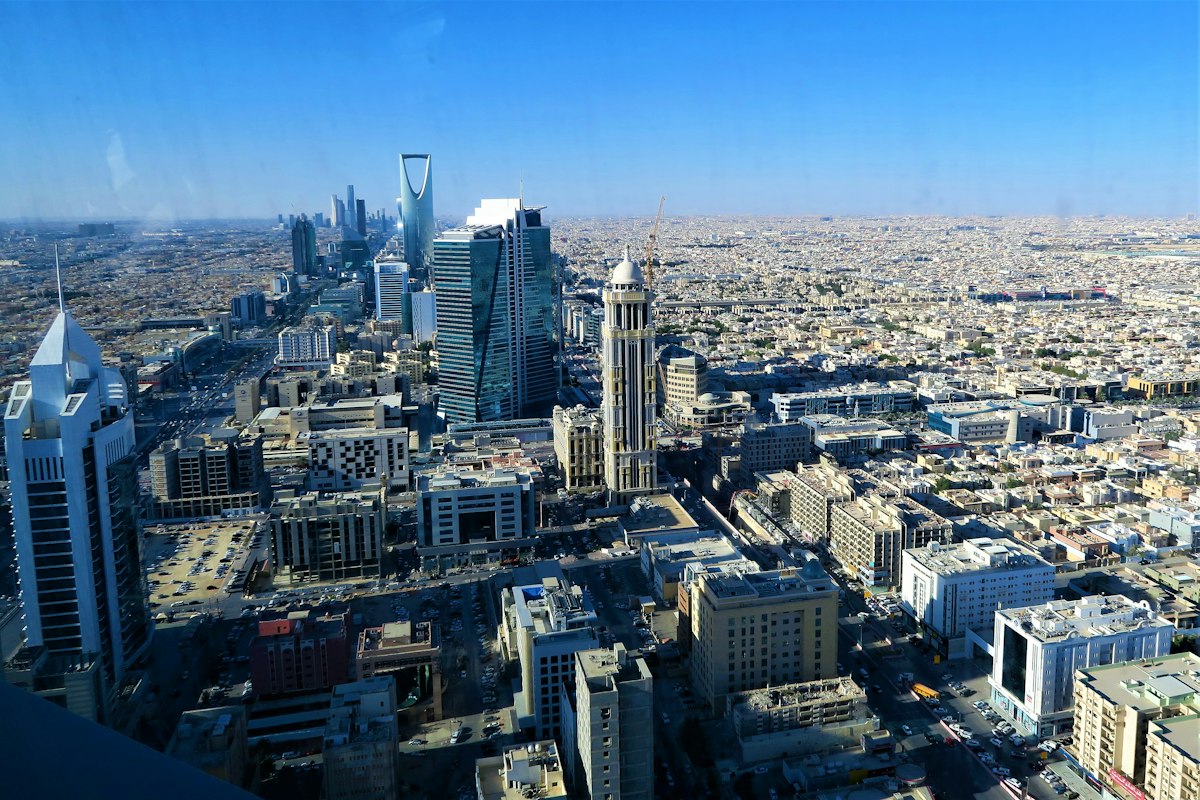
Riyadh itself has transformed. The city center, once dominated by government buildings and commercial structures, is now punctuated by luxury hotels, world-class restaurants, and entertainment venues. The Red Sea development project, discussed below, is drawing visitors to the southwest, but Riyadh remains the primary business hub and the essential first stop for any substantial Saudi Arabia corporate visit.
Flight time from Dubai to Riyadh is approximately 90 minutes, while flights from Europe to Riyadh are typically 5-6 hours. Private aviation eliminates the ground time and stress of commercial aviation, making business travel to the Kingdom accessible in ways that commercial aviation cannot match.
King Abdulaziz International Airport: The Red Sea Gateway
Jeddah, the kingdom's principal port city on the Red Sea, is served by King Abdulaziz International Airport (JED), which has undergone one of aviation's most spectacular infrastructure transformations in recent years.
The new King Abdulaziz International Airport, which opened in phases beginning in 2018, is a architectural masterpiece. The terminal's soaring atrium, integration of traditional Islamic design elements, and state-of-the-art facilities have redefined the traveler experience. The airport's design specifically emphasizes business aviation capabilities, with dedicated business aviation facilities and efficiency-focused processes.
Jeddah's importance lies in its proximity to Saudi Arabia's rapidly developing leisure and hospitality sector. The Red Sea project, discussed in detail below, is transforming the coastline south and north of Jeddah into a world-class destination. For travelers seeking to access these developments, Jeddah is the essential gateway.
NEOM: The World's Most Ambitious Development
NEOM, pronounced "neo-m" and derived from the Arabic word "mustaqbal" (future), is a mega-project that represents Saudi Arabia's boldest Vision 2030 initiative. Located in the northwestern part of the Kingdom near the coast, NEOM is being developed as a futuristic mega-city designed from first principles as a 21st-century urban center.
NEOM is vast — approximately 26,500 square kilometers, roughly the size of Massachusetts. The development will be anchored by three main projects: The Line, an linear city built for walkability and sustainability; Neom Bay and coastal areas designed for luxury hospitality; and Oxagon, a polygonal industrial and logistics hub.
The Line specifically represents a revolutionary urban design concept. Imagine a city where citizens live and work in a 170-kilometer linear development with world-class infrastructure, minimal traffic, and seamless integration of technology and sustainability. It sounds like science fiction, but construction is advancing rapidly.
For private aviation travelers, NEOM represents the future of business and leisure in the Kingdom. International investors, technology executives, and wealthy individuals increasingly need to visit NEOM for business and to experience the development firsthand. A private jet based in Jeddah can position you at NEOM for critical business meetings or to experience the emerging destination.
The development has also attracted major international brands and luxury hospitality operators who are planning presence in NEOM. Access via private aviation is becoming not a luxury convenience but an essential business requirement.
The Red Sea: A New Global Destination
While NEOM represents the technological future, the Red Sea project represents the leisure future of Saudi Arabia. The Red Sea development encompasses approximately 34 islands and 50 kilometers of pristine Red Sea coastline south of Jeddah.
The project is being developed in phases, with the inaugural resorts and infrastructure opening in late 2023 and expanding significantly through 2025 and 2026. The vision is to create a world-class destination comparable to the Maldives or Seychelles, but with the distinct advantages of Saudi cultural heritage, proximity to established business centers, and extraordinary natural beauty.
The islands themselves are stunning. Crystal-clear waters, vibrant coral reefs, white sand beaches, and desert landscapes create a dramatic backdrop. The infrastructure being developed emphasizes sustainability and luxury simultaneously — low-impact development, renewable energy, and world-class hospitality.
For private aviation travelers, the Red Sea offers several advantages. First, it is relatively proximate to established business centers — a short flight from Dubai, Riyadh, or the broader GCC. Second, the visa-simplified environment for visitors to the Kingdom means international travelers can now access this destination with minimal friction. Third, the privacy and convenience of private aviation access mean you can experience a world-class destination without the commercial aviation queues and delays.
The Cultural Renaissance
Beyond business and hospitality, Saudi Arabia is experiencing a cultural opening that is reshaping how the Kingdom is perceived globally. The King Fahd Road in Riyadh now hosts entertainment events, restaurants, and cultural venues that would have been unthinkable a decade ago. The Diriyah Season, a major cultural event, attracts performers and visitors from around the world. Music festivals, sporting events, and international conferences are increasingly held in the Kingdom.
For travelers accustomed to the cosmopolitan culture of Dubai or Abu Dhabi, this evolution is significant. Riyadh and Jeddah are rapidly developing sophisticated hospitality and entertainment sectors that cater to international tastes while celebrating Saudi heritage and culture.
Practical Considerations for Private Jet Travelers
Crew Qualifications: All crews operating in Saudi airspace must have Saudi-recognized qualifications. Most Western-qualified pilots can obtain appropriate certifications, though visa requirements and licensing procedures should be coordinated before operations begin.
Aircraft Registration: Aircraft operating frequently into Saudi Arabia should be evaluated for potential registration in the Kingdom under GACA oversight. This can simplify operations and optimize costs.
Visa and Immigration: While tourist visas are now easier to obtain, business travelers and their crews should ensure appropriate documentation is current. Private aviation can reduce visa friction, but travelers and crew should not assume the Kingdom's immigration procedures are less rigorous than other nations.
Seasonal Considerations: The Kingdom's climate is extreme. Summer temperatures in Riyadh and the interior regularly exceed 50°C (122°F), creating operational challenges and personal discomfort. The optimal seasons for travel are October through April.
The Vision Materializing
Saudi Arabia's Vision 2030 transformation is not a theoretical initiative — it is materializing in ways that are tangible, dramatic, and increasingly consequential for regional business and international relations. NEOM will host the future of urban development. The Red Sea is becoming a world-class destination. Riyadh is evolving into a global business hub.
For private aviation travelers, the Kingdom's renaissance creates extraordinary opportunities. Access to business centers, investment opportunities, luxury destinations, and cultural experiences that were inaccessible a decade ago is now available with the convenience and privacy that only private aviation provides.
At MDG Aviation Limited, we have extensive experience facilitating business jet operations in Saudi Arabia and throughout the GCC. Understanding the regulatory environment, positioning aircraft optimally, and matching aircraft to the specific requirements of Kingdom operations are specialties we have developed through hundreds of successful client engagements.
Saudi Arabia is no longer a destination primarily for resource extraction specialists and government officials. It is becoming a destination for global business, international investment, luxury travel, and cultural experience. Private aviation is uniquely positioned to serve this transformation.